Blog Inside Sneeze It · Inside the AI layer · Part 3
The AI suggests, your people score: inside our brainstorming room
Ideate takes one hunch through six steps and ends with the cheapest test you could run this week. Claude adds ideas when asked. It is never allowed to rank them.
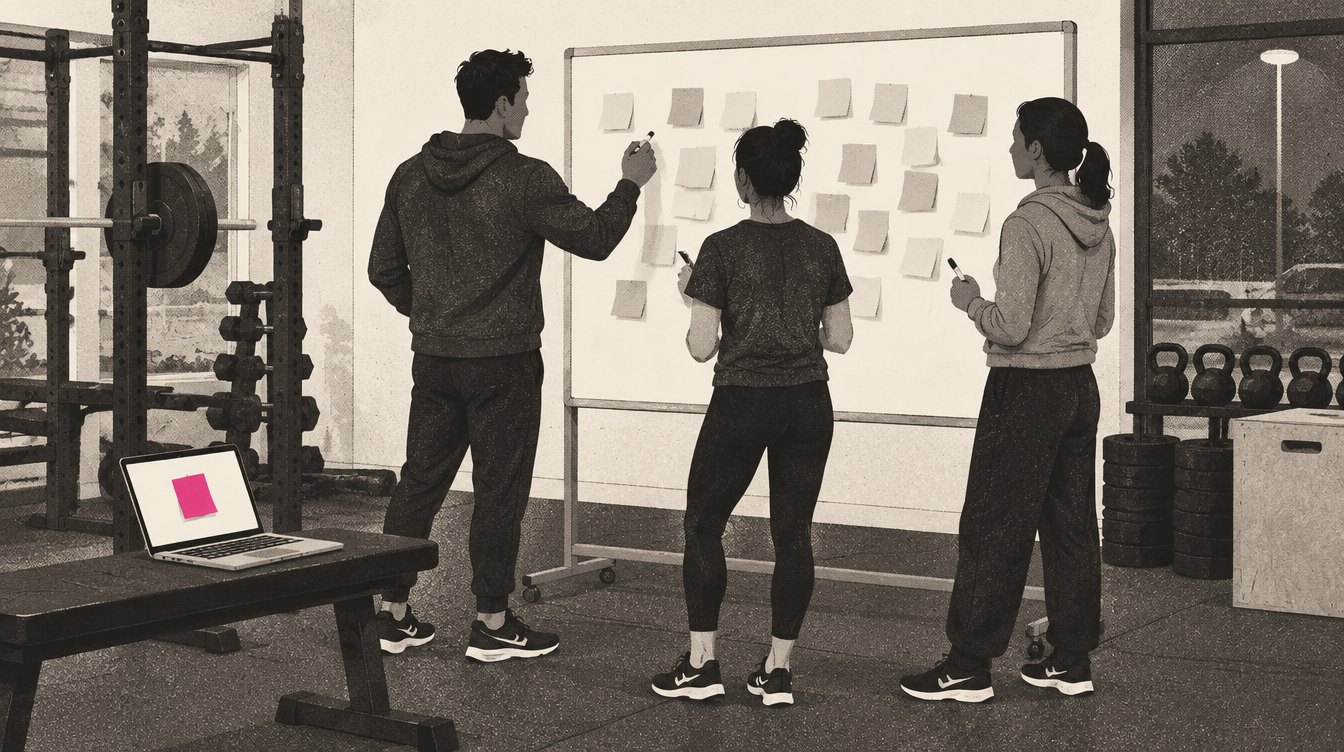
Every multi-location owner has a list of hunches. Members keep canceling in month three. The noon hour is dead at two of the twelve locations. Maybe it is time for a second concept. Most of those hunches end one of two ways: a meeting with a whiteboard photo nobody opens again, or a decision made by whoever talked loudest.
We built Ideate to end them a third way: with a test you can run this week. You bring one sentence. It walks your team through six steps. Your people score the ideas. Every finalist meets its strongest objection while it is still cheap to be wrong. It has been live at ideate.sneeze.it since September 19, free while we test it, open to anyone with an email address. No password, no card.
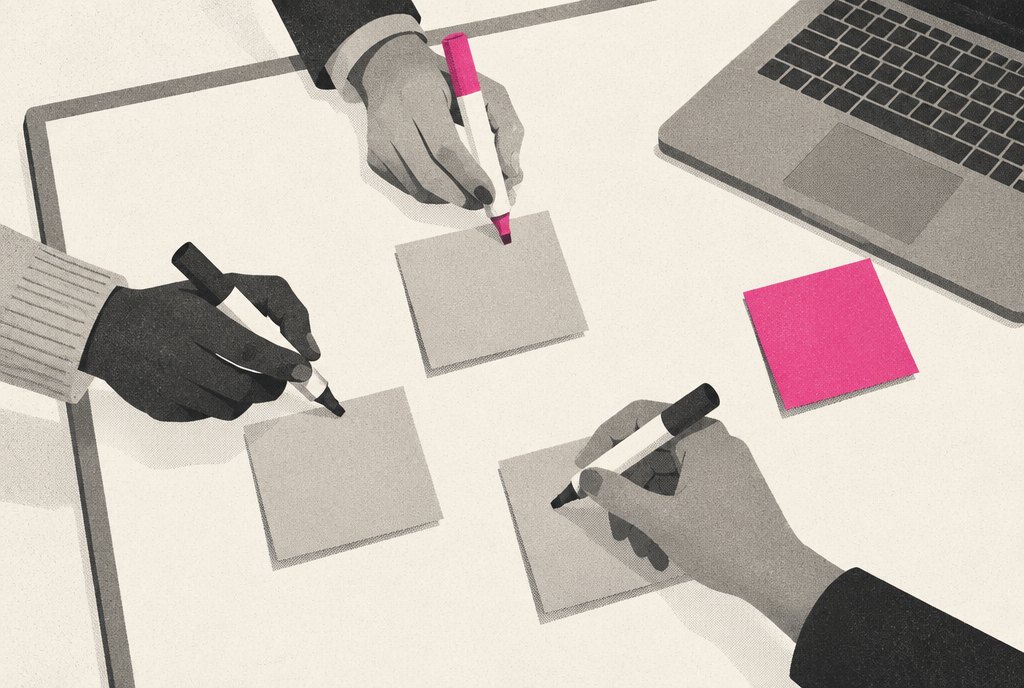
The rule that shaped the whole product is short. Claude can add ideas. Claude cannot score them.
Source: Sneeze Ideate, October 10, 2026
Six steps, people first
Ideate is built on the IDEATE Method by Cohen, Pool and Neck: Identify, Discover, Enhance, Anticipate, Target, Evaluate. Each step is a column of cards on one board.
At every step, the team answers three questions themselves first. Only then can someone press "Push me," and Claude adds what is not on the board yet. Generating five to eight ideas takes 15 to 40 seconds. Order matters here. If the AI goes first, the room anchors on its list and stops thinking. If people go first, the AI fills gaps instead of setting the agenda.
- 1One sentenceA frustration, a hunch, a decision you keep putting off
- 2Six stepsIdentify, Discover, Enhance, Anticipate, Target, Evaluate
- 3People scoreMigraine times Enthusiasm, plus Gut
- 4Three finalistsPicked from the top of the scoreboard
- 5ChallengeStrongest objection and cheapest test this week
The early steps include tools that make a problem worth solving before anyone solves it. "Sharpen" tests a problem against six checks and rewrites it:
- A migraine, not a mosquito bite
- People already pay for a bad fix
- Not solved in five minutes
- Plenty of people have it
- You can name who has it
- A business, not a feature of one
"Find the customer" works through the segment, a persona, why you are the one to serve them, their adjacent needs, and where to go and watch them. "Think bigger" climbs any idea three rungs in scope and says what must be true at each rung. Take an idea that starts as a fix for one gym: rung one is this location, rung two is every location in the system, rung three is a new line of business. An "ambition dial" sets how far Claude reaches, from Practical to Moonshot.
Why Claude never holds the marker
The scoreboard is where most AI brainstorming tools go wrong. Ask a model to rank ideas and it will, confidently, and the ranking will carry an authority it has not earned. It does not know your members, your lease or your team's appetite.
So in Ideate, people score every idea on three things. Migraine: how badly does this hurt the people who have it? Enthusiasm: how much does our team want to do it? Gut: what does experience say? The score is Migraine times Enthusiasm, plus Gut. Pain and energy multiply, because an idea that is weak on either is weak. Gut adds, because it should tip a close call, not overrule the other two.
Claude can add ideas. Claude cannot score them. Unscored stays unscored, never zero.
Two smaller rules come from the same place. A score stays empty until all three parts are set, so a half-scored idea never looks like a real number. And an idea nobody has scored stays unscored. It does not quietly become a zero and sink to the bottom. Those rules keep the scoreboard honest about what the room actually decided.
The scoring also changes who wins. In a normal meeting, the loudest person's idea gets the most airtime. When everyone scores on the same three questions, a quiet manager's idea with a real migraine behind it can rise past the owner's favorite.
Every finalist meets its strongest objection
The team picks up to three finalists. Then "Challenge" gives each one two things: its strongest objection, and the cheapest test you could run this week.
That second part is the point of the whole tool. A finalist is not a plan. It is a bet, and the cheapest test is how you find out whether to place it. Offer the new program to the next ten members and count the yeses before building anything. Run the new class time at one location for two weeks before rolling it out.
A typical brainstorm
Ideas go up on the wall. The most senior or loudest voice picks one. Objections come up months later, after money is spent. The whiteboard photo is the only record.
An Ideate board
People answer first, then the AI fills gaps. Everyone scores on the same three questions. Each finalist gets its strongest objection now, and a test that costs a week, not a quarter. The board stays where you left it.
Claude has rules here too. It may not invent a number; any figure it raises comes out as a question for you to check. If an AI panel cannot answer, it shows the reason instead of an empty list. And without the AI at all, Ideate still works as a six-step board.
What it learns, and what it keeps private
Text you type goes to Anthropic's Claude API only when you ask Claude for something, and API data is not used to train models. Your boards are seen by you and the Sneeze It team, nobody else. Only a board's creator can delete it, and when they do, it is gone.
On our own team's boards, Ideate is built to connect to the Sneeze Brain, the shared memory our tools learn from. When a staff member removes an AI card or scores one a 1 or 2, that counts as a correction, and the next prompt can read the lesson. Only what the AI wrote and what a person said about it is sent. A board's title, starting point and hand-written cards stay in Ideate, and a guest's board sends nothing to the Brain at all. You can read how that works in correct it once, every tool learns. The same people-decide habit shows up in our reporting, in truth, not wins.