Blog Inside Sneeze It · Inside One
Inside One: an agency that runs on its own software
Every tool our team uses to make, run and report your marketing is one we built, at *.sneeze.it. Here is what each one does, who uses it, and how they all read from a single record.

Most agencies run on rented software: a project tool, a reporting tool, a creative tool, a CRM, a spreadsheet that holds it all together. Since late summer 2026 we have been building our own, one tool at a time, each one written for the same customer: a fitness, wellness or med spa brand with more than one location.
We call the whole of it One. The site you are reading is one.sneeze.it. The teammate in our Slack is @one. The Chrome extension our staff use is Sneeze It One. This post is the map: every tool, who it is for, whether it is live, and the rule that ties them together.
The rule: one record, many readers
Every tool reads its clients from the Hub, and none of them keeps its own copy.
The Hub (hub.sneeze.it) is one page per gym, studio or spa location. That page says who runs the location, which Facebook, Google Ads and Google Business Profile accounts it is connected to, which tracking tags are on file and which we have actually seen fire, what it spent this month by platform, and every request in flight. Today it holds 523 locations across 60 brands. That count includes past clients, prospects and a full franchise roster, so it is the number of locations on the Hub, not the number we serve.
The reason is drift. When five tools each keep a client list, you get five slightly different client lists. A closed location lingers in a report, or a new owner's name is fixed in one tool and stale in four. The only cure we found was one place where a client exists, and every other tool asking it.
When five tools each keep a client list, you get five slightly different client lists.
- 1HubOne page per location: owner, accounts, tracking, spend, requests
- 2Working toolsStudio, Coach, Audience and Call Center read the client from the Hub
- 3BrainEvery correction becomes a lesson each tool reads before it writes
- 4DoorwaysStaff ask any tool from Claude, ChatGPT, Slack or the browser
- 5Your teamApproves ads, follows requests, receives a checked report
Source: hub.sneeze.it live counts, October 10, 2026; Sneeze It code
Every tool, who uses it, and where it stands
Some of these face clients and prospects. Most are for our own team. Where a tool has a public homepage, it is linked below.
| Tool | Who uses it | What it does | Status |
|---|---|---|---|
| Hub | Our team, plus franchisor, owner and agency logins | One page per location; the record every other tool reads | Live; card charging built, not yet charging |
| Studio | Our team builds; your team approves | Makes ads, shows them exactly as they will look on 8 platforms, and gets a one-click yes or edit | Live |
| Coach | Our success coaches | Reads ads, call center, listings and the local market side by side; a worst-first fix list and a checked report | Live |
| Audience | Our strategists; you get the report | Who lives within a real drive of the door, who competes for them, what a location there should produce | Live |
| Call Center | Our call center team | Counts every call, text and booking our callers make for each location's new leads | Live |
| Sneeze Brain | Our team | Turns each correction into a lesson every tool reads | Live, internal, in its first weeks |
| Sneeze It MCP | Our team, inside Claude, ChatGPT or Claude Code | Ask any tool a question and see only what you may see | Live, staff only today |
| @one in Slack | Our team | Look up, update and ask about any client in plain words | Live |
| Sneeze It One for Chrome | Our team | Save a competitor ad in one click; see the Hub record for any business website | Live; version 1.3 in store review |
| Creative Benchmarks | Anyone | What 18,920 graded Meta ads say, plus a free report on your own ads | Live |
| Agent Ready | Anyone | Checks whether an AI assistant can book or buy on your website | Live |
| Ideate | Guests and our team | A six-step brainstorming room where people, not the AI, score the ideas | Live, open to guests while we test it |
| Team home | Our team | The start page with every tool, the week and office news | Live |
| one.sneeze.it | Anyone, and AI agents | This site, built to be read by people and assistants | Live, before public launch |
How the tools lean on each other
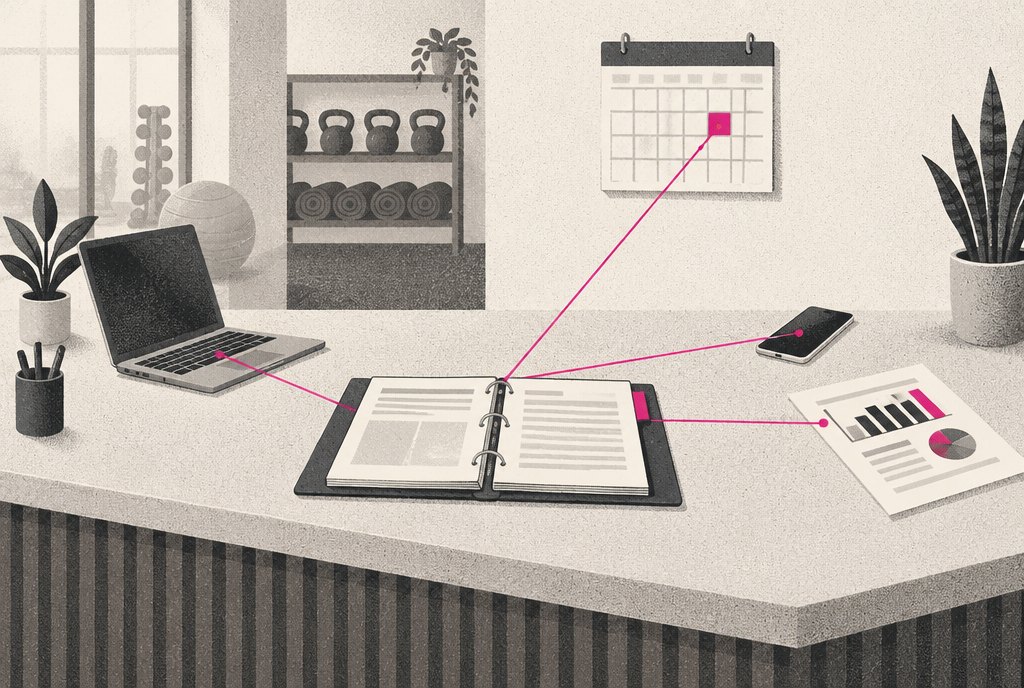
Studio reads who a client is from the Hub, and builds the brand kit from the brand's notes there. If the brand book is a PDF on the Hub, it leads the kit's colors, fonts and logos.
Coach takes its client list, budgets, contacts and owner groupings from the Hub, then reads Meta, Google Ads, the call center, listings and the market. An owner with several locations gets one combined report, because the Hub knows which locations belong to whom.
Audience starts from a business on the Hub and studies its market by drive time. Call Center works the locations the Hub marks as being called now.
The Brain attaches every lesson to a location or a brand on the Hub. So when our creative team corrects something Studio wrote about a location, Coach reads that lesson the next time it writes about the same location. A person's correction counts once; a change we only watched someone make counts half. A lesson goes agency-wide only after it shows up for three different clients, and then only with a human yes.
The doorways let our people reach all of this without opening six tabs. The MCP connector puts about 70 tools behind one door in the AI chat they already use, with every answer trimmed to approved fields. @one answers in Slack and refuses to work in any channel shared with another company. The Chrome extension shows the Hub's record for a business the moment someone lands on its website.
Rented tools
A client list in every tool. A new owner's name fixed in one place and stale in four. A closed location still on a report.
One record
One page per location. Change a fact once and every tool reads the change. Mark a former client once and every tool leaves it out.
What we built in, on purpose
A few rules run through all of it, and they matter more than any one feature.
No source, no number. Every figure on a location page names where it came from. If nothing was read, the spend is blank, never a zero, because a zero is a claim.
A guess is never taken. Location rosters are matched on the club system's own id, never on the name, because towns repeat and spellings drift. If two locations could match, the tool stops and asks a person.
Every change is recorded. Our staff can click any fact on a page and fix it. The Hub keeps the old value, the new one, who changed it and when, and no import ever overwrites a hand edit.
People decide. Studio does not publish an ad without an approval. Coach reports are read and checked before they go out. Ideate lets people score the ideas; the AI only writes them.
Next in this series: why we rebuilt our portal around the location, and one record, every tool.