Blog Franchise Growth · The Franchise Growth Playbook · Part 11
Why franchisees ignore corporate marketing, and how to earn adoption
A franchisee who skips the brand's campaign is usually making a reasonable call with the information they have. Here is what owners need from the brand before they use what it builds.

Every franchisor has seen it. The brand team spends a quarter on a campaign: new photography, new offer, ad templates for every size, a launch webinar. Six weeks later some locations are running it, some are running something homemade, and some are running nothing at all.
The easy story is that franchisees are stubborn. In our experience the better story is that they are busy owners making a reasonable call with the information they have. They are paying into a fund, watching their own numbers, and deciding whether the brand's work will help their location this month. When they say no, they are usually telling you something true about what the brand handed them.
This playbook is about earning that yes.
What a franchisee is actually weighing
A location owner looks at a corporate campaign and asks five questions, whether or not they say them out loud.
- Will it work here? Not in the brand's best market. Here, with this competition and this budget.
- Can I change what I need to? The offer, the local photo, the hours that differ from the brand standard.
- How much work is it? A campaign that needs three logins and a design tool is a campaign that waits until Sunday night.
- Where does my fund money go? Owners pay into the brand fund and want to see what it bought.
- Who do I call when it breaks? An ad stuck in review on a Friday afternoon is a lost weekend.
None of these is about taste. They are about proof, control, effort, visibility and speed. Most corporate marketing answers the first one with the brand's national results and skips the other four.
Owners also arrive primed to ask. The FTC's guide for people buying a franchise tells them that franchisees "are often required to contribute a percentage of their sales" to an advertising fund, and to ask how the fund is spent and whether franchisees control that spending. The FTC's compliance guide for franchisors says Item 11 of the disclosure document must state whether franchisees get "a periodic accounting of fund expenditures." Your owners were told to watch the fund before they signed. They are still watching.
Why the brand's best ad is not proof for a location
The first question is the hardest, because the honest answer is often "we don't know yet." Our own data shows why. In Creative Benchmarks we graded over 18,920 Meta ads by what they produced, not what Meta liked.
Source: Creative Benchmarks
Read the last number carefully. A winner here is an ad Meta chose to spend heavily on. Fewer than half of those winners beat their own account's average cost per lead. So "this ad scaled in the national account" does not mean "this ad will bring cheap leads to your location." A franchisee who has been burned by that gap once will ask for local proof the next time, and they are right to.
The answer is not a bigger national case study. It is a small, honest local test, reported the same way for every location. We wrote about the reporting side in truth, not wins, and about pacing new creative in how many new ads a week.
When a franchisee says no to the brand's campaign, they are usually telling you something true about what the brand handed them.
The adoption playbook
- Ask before you build
Before the next campaign, ask a handful of owners from different kinds of markets what they would need to run it. Write the answers down and show owners where they changed the plan.
- Decide what is locked and what is local
Logo, type, color and claims are locked. Offer, local photo, hours, address and booking link are local. Publish the list. Owners stop fighting the brand when they can see where their room is.
- Ship it ready to run
Give each location its campaign with its own name, address and booking link already filled in, in every size it needs. If the owner has to open a design tool, adoption drops to the owners who enjoy design tools. This is how we use Studio: brand kits hold what is locked, and each location's version is drafted from its record.
- Make approval one step, on the real thing
Owners should approve exactly what will run, as it will look on the phone, not a PDF of a mockup. We explained the method in approve exactly what will run.
- Run a local test before a system rollout
Pick a small group of volunteer locations, run the campaign for four weeks, and report each location against its own past, not against the brand's best market. Our four-week creative test plan is one way to set it up.
- Show the fund
Every quarter, show owners where fund money went, in plain categories, and what each line produced where it can be measured. Say "not measured" where it cannot.
- Name a person and a response time
Every owner should know who fixes a stuck ad and how fast. Write the promise down and report against it.
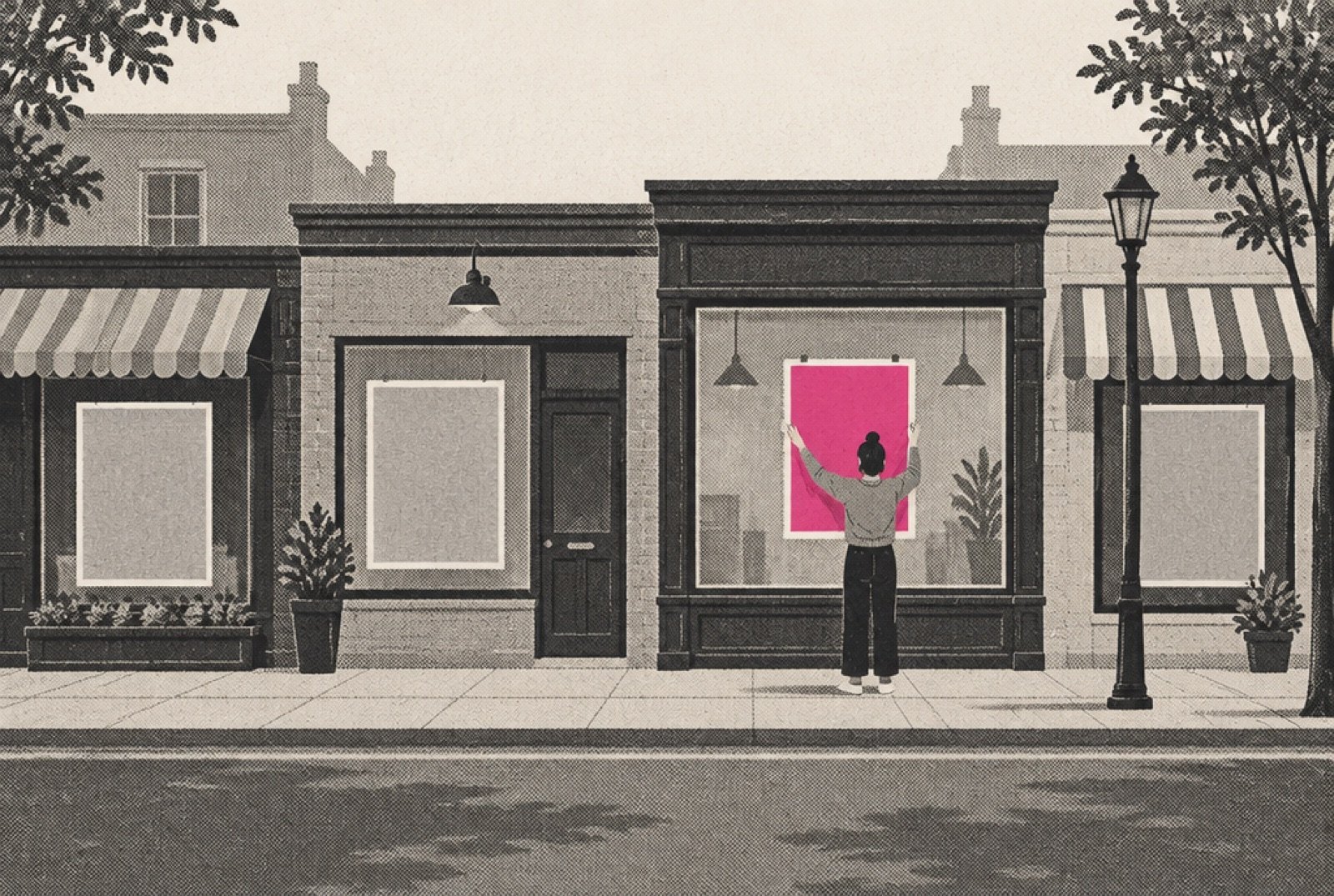
Mandate or earn it?
Some franchisors respond to low adoption with a rule: every location must run the national campaign. A mandate can get the ads live. It cannot make owners trust them, and an owner who does not trust the brand's marketing may quietly run their own on top of it, which can put the location bidding against the brand in the same ad auction.
Adoption by mandate
The campaign arrives finished. National results are the proof. Owners rebuild it in a design tool or skip it. Fund spending shows up once a year in a disclosure document. Problems go to a shared inbox.
Adoption by earning it
Owners shape it before launch. A local test is the proof. Each location gets its own version ready to approve. Fund spending is shown every quarter. Problems go to a named person with a response time.
Earning adoption is slower at the start. It is faster by the second campaign, because owners have seen the brand keep its word.
What to measure this quarter
You cannot improve adoption you do not count. Three rates, measured every month:
- Adoption rate: locations running the current brand campaign, divided by locations open.
- Time to live: days from campaign release to the first ad running, as a median across locations.
- Edit requests: requests for changes outside the "local" list, per campaign. A high number means the locked list is wrong, not that owners are difficult.
A worked example, with invented numbers. Say a 40-location system releases a campaign and 14 locations run it in the first month. That is 35%. If the next campaign is built with the steps above and 26 run it, that is 65%. The arithmetic is simple. The work is in making each step real.
Counting adoption needs a clean list of which locations exist, who owns each one and which ad accounts are connected. We keep that in the Hub and wrote about why in one record, every tool and the four states of ad account access.
Sources
- Sneeze It, Creative Benchmarks, https://benchmark.sneeze.it, figures as published October 2026.
- Federal Trade Commission, "A Consumer's Guide to Buying a Franchise," https://www.ftc.gov/business-guidance/resources/consumers-guide-buying-franchise, September 2020.
- Federal Trade Commission, "Franchise Rule 16 C.F.R. Part 436 Compliance Guide," https://www.ftc.gov/system/files/documents/plain-language/bus70-franchise-rule-compliance-guide.pdf, May 2008 (Item 11 discussion).