Blog Franchise Growth · The Franchise Growth Playbook · Part 10
A new franchisee's first 30 days of marketing: the onboarding checklist
A new owner's first month decides whether the brand's marketing works for them or around them. Here is the checklist a franchisor can run with every new franchisee, week by week.
A new franchisee signs, pays the fee, finishes training and then meets the marketing side of the brand in the worst possible way: a pile of logins, a brand guide, a list of vendors and a promise that someone will be in touch. By the time anyone asks whether their ads are working, nobody is sure who owns the ad account, whether the tracking was ever tested, or why the location's Google profile still shows the old phone number.
None of that is the franchisee's fault. It is what happens when onboarding is about training and operations, and marketing is a folder handed over at the end. The first 30 days are when the habits form: who asks for what, where requests go, which numbers get reported and against whom. Get those right once and every later conversation is easier. Get them wrong and the brand spends the next year untangling ownership and arguing about reports.
Why this deserves a written checklist
Franchise systems keep adding owners. The IFA and FRANdata outlook for 2026 projects the number of US franchise establishments rising from 832,521 to 845,009.
Source: International Franchise Association, 2026 Franchising Economic Outlook release, February 19, 2026
That is a net increase of about 12,500 establishments by the outlook's own figures (845,009 minus 832,521), before counting locations that changed hands. Every one of them has a first month. A system that onboards a handful of owners a year can get away with doing it from memory. A system that onboards a dozen cannot, because the person who remembers how it was done last time is on vacation the week it matters.
The handover folder
A brand guide, a vendor list and a set of logins. Ownership of accounts decided by whoever set them up. Tracking assumed. The first report arrives whenever, comparing the location with the system average.
The 30-day checklist
Five steps with dates and owners. Accounts owned by the right party and connected on purpose. Tracking seen working on the live page. A first report at day 30 that compares the location with real peers.
The checklist, week by week
The order matters. Ownership and access come before anything visible, because every later step depends on them.
- 1Days 1 to 7Ownership and access
- 2Days 8 to 14Profile, website and booking
- 3Days 15 to 21Brand kit, approvals and first ads
- 4Days 22 to 30First report against real peers
- Days 1 to 7: settle who owns what
Write down, for this location, who owns each account: the Business Profile, the ad accounts, the website page, the booking system and the domain email. Then grant access deliberately. For each account, record whether it is connected, or which of the four ways it is not: never asked for, requested and waiting, lapsed, or revoked. The four states of ad account access explains why a single "connected" checkbox hides most of the problems. If an account was set up under a former owner's personal login, fix it now, while everyone is still paying attention.
- Days 1 to 7: get the Business Profile right
On Google, a Business Profile can have several owners but only one primary owner, and managers can do most things owners can except add or remove people. A new owner or manager also waits seven days before some controls work, including removing other users and transferring primary ownership. So add the right people in the first week, not the fourth. Decide as a brand which roles the franchisee and the franchisor each hold, and apply the same answer to every location.
- Days 8 to 14: make the location findable and bookable
Confirm the location's page on the brand site carries the real address, hours, phone and a working booking link, and that the same facts appear on the Business Profile. Then send a test enquiry through the form and confirm the tracking tag recorded it on the live page. "We have a tracking ID on file" and "we saw the tag fire on the live site, and when" are different facts, and only the second one counts. While you are there, check whether an AI agent can find and use the booking path. Your next customer won't visit your website explains why that now matters.
- Days 15 to 21: brand kit, approvals and the first ads
Give the new owner the brand kit and the offers they are allowed to run, and agree who approves what. Studio separates three client roles: an admin who approves creative and spend, an approver who approves creative only, and a reviewer who can comment and request changes. Whatever tool you use, decide those roles for each location before the first ad is built, so approval is a click and not an email chain. The first ads should go to households inside the location's real drive time and to a page the test enquiry already proved works.
- Days 22 to 30: the first honest report
At day 30, the franchisee gets a first report. It should compare the location with the brand's other locations of similar age, over the same dates, and say plainly what is working, what is not and the single biggest problem. Coach compares each location with its brand's other locations and refuses the comparison with fewer than three peers. Truth, not wins is why we lead with cost against peers and the biggest problem rather than a list of wins.
"We have a tracking ID on file" and "we saw the tag fire on the live site" are different facts, and only the second one counts.
Where the record lives
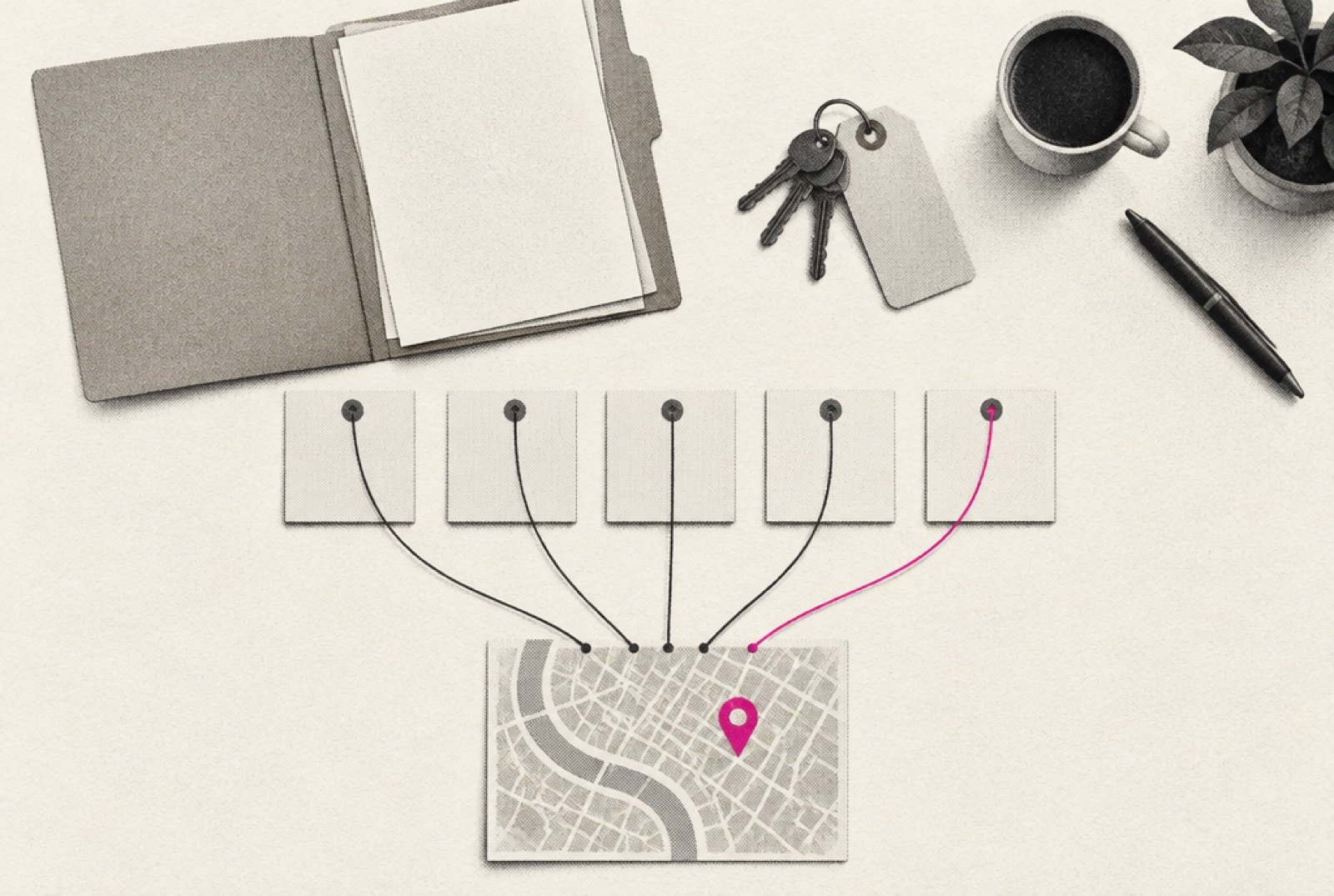
The checklist only works if its answers are written down in one place, attached to the location rather than to a person's inbox. That is the job the Hub does for us: one page per location with who runs it, which ad accounts and tracking it is connected to (by exact account), which of the four not-connected states any of them is in, and every request in flight. The Hub's public homepage listed 523 locations and 60 brands on October 10, 2026. Our tools read their client and location facts from that one record rather than keeping their own copies, which is why we argue for it in One record, every tool.
You do not need our software to run this checklist. A shared spreadsheet with one row per location and one column per item will do for a small system, as long as every cell holds a date and a name, and nobody keeps a private copy.
What to measure, and what to do this quarter
Three numbers tell a franchisor whether onboarding is working across the system:
| Measure | What it shows | Good looks like |
|---|---|---|
| Days from signing to all accounts connected | Whether access is handled deliberately | Inside the first week |
| Locations with a test enquiry seen on the live page | Whether reports rest on real tracking | Every location, before ads run |
| Locations with a day-30 peer report | Whether the first conversation is honest | Every new location |
A worked example, arithmetic only
Say a system signs 12 new franchisees in a year. If each first month loses one week to a tangled ad account or an unverified profile, that is 12 weeks of local marketing a year spent on administration, close to a full quarter for a single location. If the checklist moves ownership and access into week one, the same delays happen while nothing is running yet, and cost nothing. Every number here is hypothetical.
If a new location is also new to the market, the 90 days before opening matter as much as the 30 days after signing. The presale playbook and The grand opening calendar cover that stretch.
Sources
- International Franchise Association, "IFA Predicts Steady Growth For Franchising In 2026 Economic Outlook", February 19, 2026, https://www.franchise.org/2026/02/ifa-predicts-steady-growth-for-franchising-in-2026-economic-outlook/ (2026 Franchising Economic Outlook, prepared with FRANdata).
- Google, Google Business Profile Help, "Manage your Business Profile owners & managers", https://support.google.com/business/answer/3403100?hl=en (read October 10, 2026).
- Sneeze It, Hub public homepage, https://hub.sneeze.it (read October 10, 2026).