Blog Franchise Growth · The Franchise Growth Playbook · Part 1
The presale playbook: the 90 days before a location opens
A new location's first members are won before the doors open. Here is a franchisor's playbook for the waitlist, the founding offer, ad timing and the readiness signals that say a site is on track.
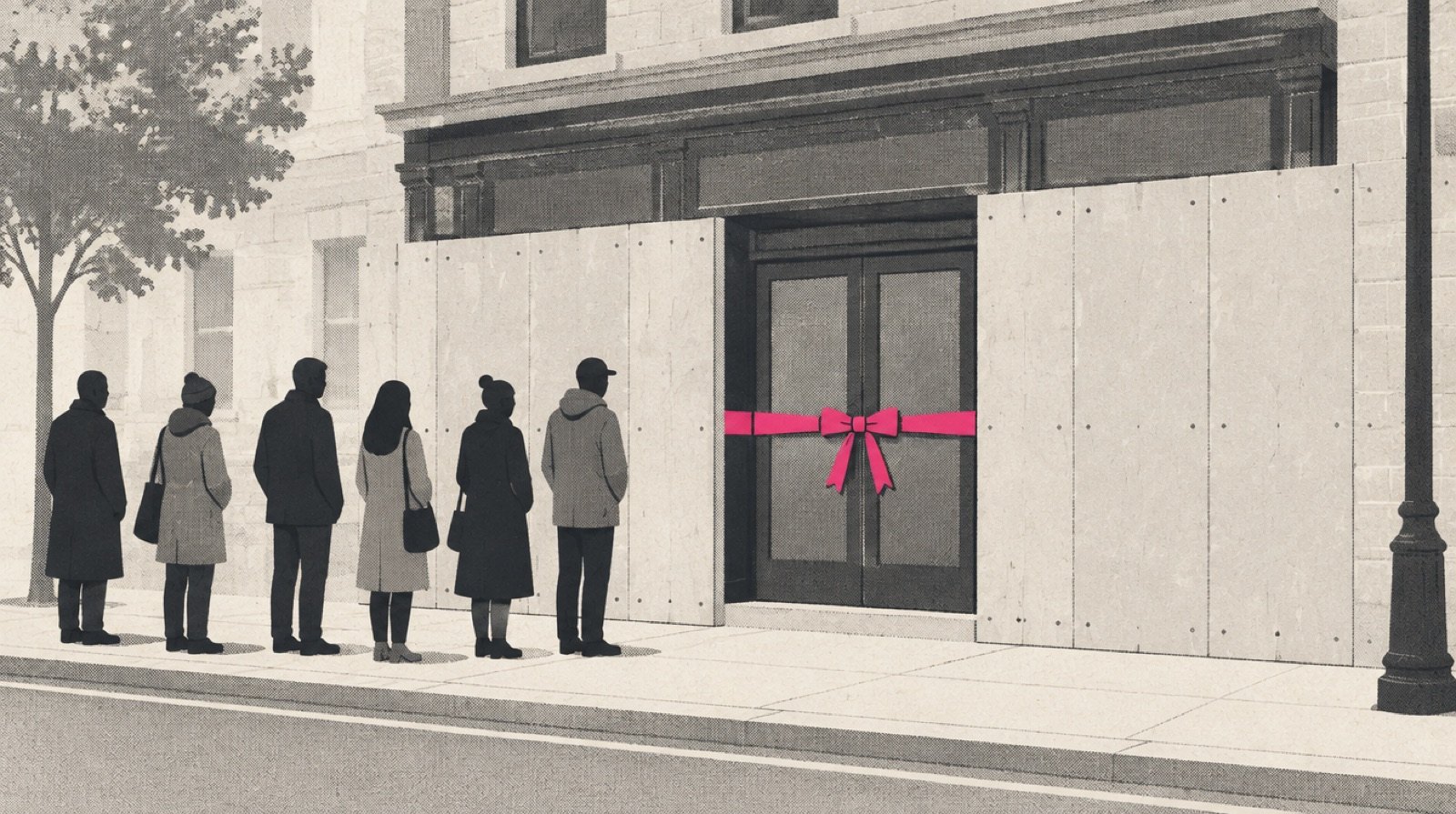
A location that opens to an empty floor starts its first month behind. A location that opens with a list of founding members has revenue on day one, staff with something to do on day one, and a story the neighborhood can see. The difference is almost never the build-out. It is what happened in the 90 days before the doors opened.
Presale is often handed to the franchisee as a folder: a logo pack, a sample flyer, a suggested offer. This playbook is the other way to run it. The brand sets the sequence, the franchisee runs it locally, and both sides watch the same handful of readiness signals every week.
Why 90 days, and what Google already gives you
Ninety days is not an arbitrary window. Google Business Profile lets a business enter a future opening date and then shows the profile on Google 90 days before that date, so local searchers can find a location that does not exist yet. The same help page says the owner can post updates, add photos and write a description during that window, and that customers cannot leave reviews or photos until the business is open.
Source: Google Business Profile Help, Add a business opening date, read October 10, 2026
That is a free, searchable storefront for three months before opening, and 90 more days of "Recently opened" after. The first window is lost if the profile is created late, or under someone's personal account. Setting the opening date, verifying the profile and putting the right people on it is step one of the playbook, not an afterthought in week twelve.
Presale as a folder
The franchisee gets a logo pack and a suggested offer. Ads start when someone remembers. The founding offer is set by gut feel. The franchisor learns the result at the ribbon cutting.
Presale as a sequence
The brand sets a 90-day sequence with dates. The profile is live at day one of the window. The offer is priced against what competitors inside the drive charge this week. Both sides read the same readiness signals every Monday.
The playbook: four phases over 90 days
The phases overlap. What matters is that each one has a start date written down before the window opens.
- 1Days 90 to 75Profile live, trade area drawn, waitlist page up
- 2Days 75 to 45Waitlist grows on local search, posts and light ads
- 3Days 45 to 14Founding offer opens with a real deadline
- 4Days 14 to 0Last call, booked tours, opening-week schedule
- Set the stage (days 90 to 75)
Enter the opening date on the Business Profile and verify it. Draw the trade area by real drive time, not a radius, so every later decision about where to advertise and where to mail is made against the households who will actually make the trip. A circle is not a trade area explains why the circle misleads. Put up a single waitlist page for the location with a form that asks for name, contact details and one question that sorts serious prospects from the curious.
- Build the waitlist (days 75 to 45)
This is the quiet phase. Post on the profile weekly. Run modest, always-on ads to people who live inside the drive time, sending them to the waitlist page. The goal is a list of local people who raised their hands, not a reach number. Record the source of every entry.
- Open the founding offer (days 45 to 14)
Now the waitlist gets something to say yes to. A founding offer works when it is clearly better than what the location will charge after opening, when it ends on a real date, and when it is priced against the market rather than against a national price sheet. Before setting it, look at what competitors inside the drive are advertising right now. Email and text the waitlist first, then widen the ads.
- Close the window (days 14 to 0)
The founding offer deadline should land before opening week, not after it. Final reminders go to everyone who joined the waitlist but did not buy. Book tours, hard-hat walkthroughs or preview classes into fixed slots so the franchisee knows how many people are coming.
The founding offer deadline should land before opening week, not after it.
Ad timing and the founding offer
Two mistakes are easy to make and easy to avoid. The first is starting paid ads too late, usually when the founding offer opens, so the ads have no waitlist to work from and no history to learn from. The second is pricing the founding offer from the brand's national sheet, without checking what the gym, studio or spa ten minutes away is advertising this week.
Our timing rule: ads begin with the waitlist page, at a budget the franchisee can sustain for the whole window, and they grow when the founding offer opens. A campaign that has been running for six weeks to the right households has history and an audience to work from on offer day. One switched on that morning has neither.
For pricing, the useful question is not "what do we charge nationally" but "what does a household inside this drive already see in their feed". Audience reads competitors' live Facebook and Instagram ads inside the trade area, pulls out the actual offer (the price, the joining fee, any free trial and the deadline), and turns that ladder into a suggested price. It declines to suggest one when the evidence is too thin. The Meta Ad Library and a spreadsheet will do the same job by hand.
The same rings can carry direct mail and streaming TV. Audience turns a mail count into a report of homes, Facebook and Instagram reach and streaming TV households for the same rings, so every channel works from one map.

Readiness signals: what to read every Monday
The franchisor should know whether a presale is on track by day 60, not day zero. Every signal below is something the franchisee can report without a dashboard.
| Signal | What it tells you | When to worry |
|---|---|---|
| Profile status | Opening date set, verified, posting weekly | Not verified by day 75 |
| Waitlist entries by source | Whether local people are raising their hands, and from where | Flat for two straight weeks |
| Waitlist to founding sale | Whether the offer is landing with people who already know you | Low after the first week of the offer |
| Booked tours or previews | Whether opening week will have people in the room | Empty slots inside the last 14 days |
| Competitor offers inside the drive | Whether a nearby rival just undercut you | A new, cheaper offer appears mid-window |
On forecasting presales: Audience refuses to forecast presale joins until at least four presales have been measured, and we think that is the right policy for any system. Until you have real presale campaigns to compare against, the honest answer is that you have not measured enough to say. Pick the next site with your own comparable locations covers how to build that comparable history.
A worked example, arithmetic only
Say a franchisee needs 150 founding members by opening day to cover the first months comfortably. Working backward, and assuming for illustration that one in three waitlist entries eventually buys the founding offer, the location needs about 450 waitlist entries by day 14. If the waitlist phase runs from day 75 to day 45, that is about 15 entries a day for 30 days before the offer even opens. If the location is at 120 entries by day 60, the franchisor knows a month early that the plan is short, while there is still time to change the ads, the offer or the mail drop. Every number here is hypothetical. The point is that a target with a date can be checked, and a hope cannot.
The quarter's work for a franchisor is to write this sequence down once, with dates relative to opening day, and hand it to every new franchisee with the waitlist page and the profile already set up. The week-by-week version that carries through opening and into the first month is in The grand opening calendar.
Sources
- Google, Google Business Profile Help, "Add a business opening date", https://support.google.com/business/answer/9174409?hl=en (read October 10, 2026).
- Sneeze It, Audience product page and about page, https://audience.sneeze.it (read October 10, 2026).